page forward page back
Table of Contents Index
Ventricular Pacing example one
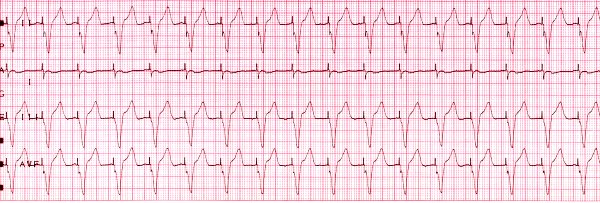
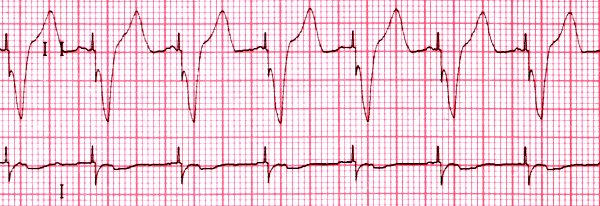
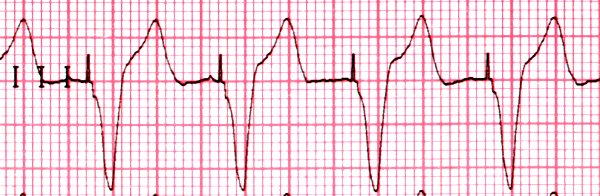
In this strip, we see pacer spikes
followed by wide QRS complexes that
resemble PVCs. This is ventricular
pacing at its most simple. There is an
interval of 0.60 seconds between
the pacer spikes, which produces a heart
rate of 100 beats per minute. This rate is higher than usual. It may be that
the pacer was programmed at this rate to eliminate undesirable beats (such
as frequent non-perfusing PVCs) that occur when the R-R interval is longer
than 0.60 seconds. Or, perhaps this patient has a small stroke volume and
needs a rate of 100 for adequate cardiac output. The pacer is in VOO mode
(Ventricular
stimulating, no sensing, no response) or VVI (Ventricular
stimulating, Ventricular sensing, Inhibition in response) mode; with no native
beats visible we can't be certain.